

























Key Insights
- OpenClaw uses Chrome DevTools Protocol for fast, programmatic browser control with a modular skills ecosystem.
- Claude Cowork runs in a sandboxed VM with OS-level access, strongest for individual developer productivity.
- OpenAI Operator uses vision-based screen reading, most consumer-friendly but slowest for automation.
- All three face prompt injection risks, but their security approaches differ significantly.
- Managed platforms like Vida deploy OpenClaw-compatible agents with enterprise security, filling the gap between open-source capability and production readiness.
AI agents that control computers are no longer experimental. In 2026, three major approaches have emerged: OpenClaw, Anthropic's Claude Cowork, and OpenAI's Operator. Each gives AI the ability to interact with software the way a human would — clicking, typing, navigating, and executing tasks. But they take fundamentally different approaches to how they do it, who they're built for, and how they handle security.
Here's how they compare.
How Each System Works
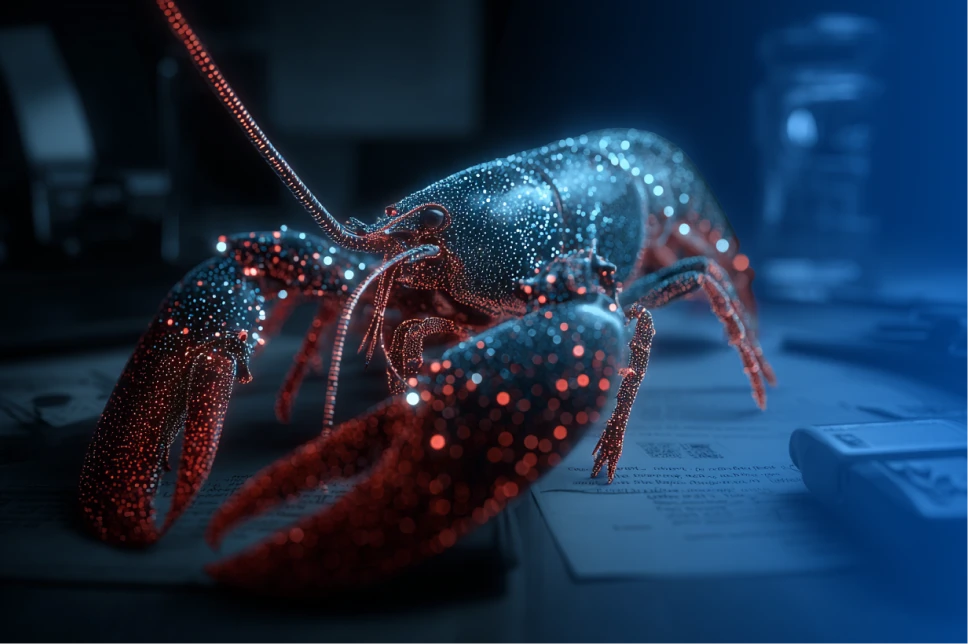
OpenClaw is an open-source, self-hosted platform that connects AI models to execution environments through a gateway architecture. It uses Chrome DevTools Protocol (CDP) to give agents direct browser control, and supports a modular skills ecosystem for extending capabilities. OpenClaw is model-agnostic — you can run it with Claude, GPT, Gemini, or other providers. The platform was designed with extensibility at its core, allowing developers to add custom skills for integrations with CRMs, payment systems, email providers, and messaging platforms.
Claude Cowork is Anthropic's approach to computer use, built directly into the Claude desktop application. It runs inside a lightweight Linux virtual machine on the user's computer, providing a sandboxed environment where Claude can execute code, control files, and interact with applications. Cowork is tightly integrated with Anthropic's model and safety systems. What makes Claude Cowork particularly compelling for power users is its native OS-level access combined with visible permission gates — when you ask Claude to delete a file or modify system settings, you get explicit confirmation dialogs. This transparency makes it feel safer than invisible background automation.
OpenAI Operator uses a Computer-Using Agent (CUA) built on GPT-4o. It takes a vision-driven approach: the agent captures pixel-level screenshots of the screen, reasons about what it sees, and performs actions like clicking and typing. Operator runs in the cloud and interacts with web applications through a managed browser environment. The approach is intentionally conservative — Operator is built to be slower and more deliberate than raw automation, because safety is prioritized over speed.
Architecture and Control
The most significant difference is in how each system "sees" and interacts with software.
OpenClaw uses CDP, which gives agents direct access to the browser's DOM — the underlying structure of a web page. This means agents can interact with elements programmatically, making actions faster and more reliable. When an OpenClaw agent navigates to a form, it can identify input fields by their HTML attributes, fill them with data, and submit them in milliseconds. The trade-off is that it requires a Chromium-based browser and is limited to web applications. For many enterprise workflows — CRM updates, form automation, customer data management — this is exactly the right fit.
Claude Cowork operates at the operating system level. It can run bash commands, edit files, install packages, and interact with desktop applications. This gives it broader reach than browser-only approaches, but within the boundaries of its sandboxed VM. A developer working on code analysis, data processing, or system administration can use Claude Cowork without leaving their machine. It handles both command-line tools and graphical applications.
OpenAI Operator uses pure visual reasoning. The agent looks at screenshots and decides what to click, much like a human looking at a screen. This makes it extremely flexible — it works on any visual interface — but it's slower and more prone to errors from visual misinterpretation. In benchmarks, Operator scored 38.1% on OS-level tasks (OSWorld) and 58.1% on web interactions (WebArena). The visual approach has another consequence: it's inherently human-speed rather than machine-speed, which limits how many tasks an agent can handle in parallel.
Security Models
Security is where these three systems diverge most sharply, and where the stakes are highest.
Claude Cowork runs inside a virtual machine, providing hardware-level isolation. It has an explicit permission system for destructive actions like file deletion, and Anthropic has invested heavily in prompt injection resistance — reporting a 1% success rate in adversarial testing, down from 30-40% two years ago. However, researchers at PromptArmor demonstrated in January 2026 that a Word document with hidden white-text prompt injection could trick Cowork into uploading sensitive files, a vulnerability that had been reported months before launch. This revealed that even tight sandboxing and safety training have limits when dealing with truly determined attacks.
OpenClaw runs with whatever permissions your operating system grants it. There's no built-in sandboxing in the default configuration. The community-driven skills ecosystem adds power but also risk — a February 2026 Snyk audit found that over 36% of AI agent skills in open ecosystems had at least one security flaw, with 13.4% containing critical issues. For individual developers who understand the risks, this is manageable. For enterprises handling sensitive data, it's a concern. The ecosystem risk exists because anyone can contribute skills, and vetting large skill repositories at scale is difficult.
OpenAI Operator runs in the cloud with human-in-the-loop safeguards. It prompts for confirmation before irreversible actions and hands control back to the user for sensitive tasks like payment or login. This makes it safer for consumer use but slower for automated business workflows. The requirement for human confirmation is both a feature and a limitation — it prevents runaway agents, but it also prevents fully autonomous operation.
What About Enterprise Use?
Here's where the comparison gets practical. Individual tools each have strengths, but none of them solve the complete problem of deploying AI agents across an enterprise at scale.
OpenClaw offers operational power but requires you to handle security, compliance, and infrastructure. Claude Cowork is excellent for individual use but doesn't scale across an organization — you can't deploy it for thousands of customer interactions. OpenAI Operator has built-in safety but is vision-based and slow, and requires human confirmation for business-critical actions.
Enterprise deployments need all three properties: operational power, security, and scale. They need agents that can operate autonomously (not waiting for human confirmation on every task), handle sensitive data safely (with audit trails and access controls), and remain available 24/7 across hundreds or thousands of concurrent interactions.
That's why Enterprise OpenClaw platforms exist. They take OpenClaw's operational model and deploy it inside environments with SOC 2 compliance, contained execution, audit logging, and multi-tenant architecture — giving you OpenClaw's power without its operational burden.
Enterprise Readiness
This is where the comparison matters most for businesses.
OpenClaw is the most capable platform for custom business automation. Its skills ecosystem, multi-channel messaging support, and browser control make it ideal for complex, multi-step workflows. But self-hosting requires managing your own security, compliance, and infrastructure. For a mid-market company, this might mean hiring or contracting dedicated infrastructure engineers, managing compliance audits, and maintaining 24/7 uptime.
Claude Cowork is powerful for individual productivity — developers, researchers, and knowledge workers who need an AI that can execute tasks on their local machine. It's less suited for deploying agents at scale across an organization. If you're a 100-person company trying to deploy customer-facing AI agents, Claude Cowork isn't the right tool.
OpenAI Operator is the most consumer-friendly, with built-in safety rails and a managed environment. But its vision-based approach is slower and less precise than CDP-based control, and it's currently limited to Pro-tier subscribers. For a business that needs to automate hundreds of interactions daily, the slowness becomes a real limitation.
For businesses that need OpenClaw's operational capabilities with enterprise-grade security, managed platforms fill the gap. Vida's AI Agent OS deploys OpenClaw-compatible agents inside a SOC 2 Type II-compliant environment with HIPAA readiness, role-based access controls, audit logging, and multi-tenant architecture. Vida AI Agents get the same browser control, skill extensibility, and multi-channel communication — but they run in a contained, monitored environment where the risks of self-hosting are eliminated. You get to deploy agents that operate autonomously, without managing the infrastructure.
Google Project Mariner
It's worth mentioning Google DeepMind's Project Mariner, which uses Gemini 2.0 to power browser-based AI agents. Mariner's standout feature is "Teach & Repeat" — you can show it a workflow once, and it learns to repeat it. It also supports simultaneous task handling across multiple browser tabs, meaning a single agent can manage multiple workflows in parallel. Currently, it's available only to Google AI Ultra subscribers on an invite basis, making it the least accessible of the four. Its deep Google ecosystem integration (Gmail, Drive, Search) makes it powerful within that ecosystem but less flexible outside it. For companies heavily invested in Google Workspace, Project Mariner could be compelling once it becomes more widely available.
Which Approach Wins?
There's no single winner. The right choice depends on what you need:
For individual productivity and development work, Claude Cowork's sandboxed VM and OS-level access make it the strongest choice. It's the tool to reach for if you're a developer automating your own workflows, analyzing code, or building systems locally.
For consumer web browsing tasks, OpenAI Operator's visual approach and built-in safety rails are the simplest. If you're a consumer who wants to automate one-off tasks safely, Operator is designed for you.
For Google-heavy workflows with limited technical requirements, Project Mariner's ecosystem integration is compelling once availability increases.
For business communication and operations at scale — where agents need to handle calls, texts, emails, browser automation, CRM updates, scheduling, and payments in a secure, compliant environment — OpenClaw-compatible platforms like Vida are purpose-built for the job. If you're running a contact center, a BPO, an agency, or any business where agents interact with customers at scale, this is where you need to look.
- OpenClaw GitHub Repository: https://github.com/openclaw/openclaw
- Karen Spinner & ToxSec, "Is Claude Cowork Safe?," Substack, March 2026: https://wonderingaboutai.substack.com/p/is-claude-cowork-safe
- Kunal Ganglani, "Claude Computer Use Security Risks," March 2026: https://www.kunalganglani.com/blog/claude-computer-use-security-risks
- "Battle of AI Agents: Google Mariner vs OpenAI Operator," LinkedIn, 2025: https://www.linkedin.com/pulse/battle-ai-agents-google-mariner-vs-openai-operator-awaynear-urv7f