





























Key Insights
- 60 to 70 percent of employee time is spent on work that could be automated with current AI technology, but most businesses can't identify which processes to automate first.
- The two most common deployment failures are automating the wrong process (underwhelming results) or not deploying at all (analysis paralysis). An assessment eliminates both.
- 74 percent of companies plan to deploy agentic AI within two years. The gap between early mover and late adopter is closing fast.
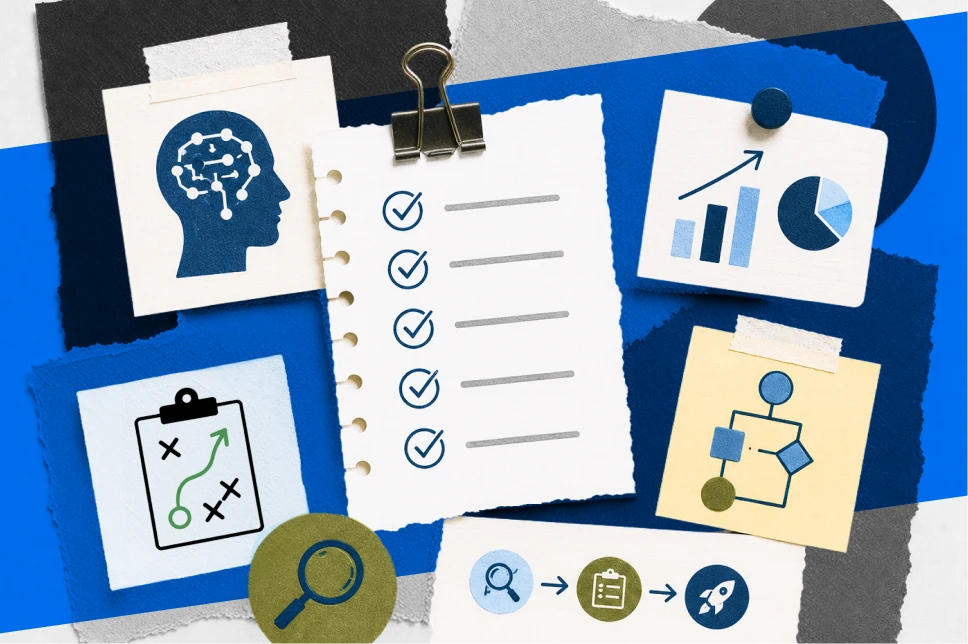
- A good AI assessment covers five areas: communications audit, operational workflow mapping, use case prioritization, tool and integration inventory, and realistic ROI projection.
- The output of an assessment isn't a recommendation to "use AI." It's a deployment roadmap tailored to your specific business, tools, and scale.
- Vida offers a paid pilot program so you can try before you buy. The pilot starts at 45-60 minute starts at $1,500 which can be used toward your first month of using Vida.
You've read the headlines. You've seen the demos. You probably have a general sense that AI agents could help your business answer calls, automate follow-ups, or handle the repetitive work your team doesn't have time for. But when it comes to actually deploying AI agents, most businesses hit the same wall: they don't know where to begin.
Not because the technology isn't ready. It is. And not because the ROI isn't there. McKinsey estimates that 60 to 70 percent of employee time is spent on work that could be automated with current AI technology. The problem is that most businesses can't see their own blind spots. They know things are inefficient, but they can't point to exactly which processes are costing them the most, which workflows would benefit first, or what the realistic return would look like.
That's what an AI assessment solves.
You Can't Optimize What You Haven't Mapped
Every business has processes that look fine from the inside but are quietly bleeding time and money. The front desk that sends 30% of calls to voicemail because nobody can pick up during the lunch rush. The intake process that takes three people and four tools to complete. The follow-up cadence that depends entirely on whether someone remembers to send the email.
These aren't problems businesses put on a whiteboard and decide to fix. They're the kind of inefficiencies that become invisible because they've always been there. Your team works around them. They become "just how we do things."
An AI assessment pulls these patterns into the open. It maps your communications, your workflows, and your operational handoffs, and identifies the specific points where an AI agent would have the highest impact. Not in theory. For your business, with your tools, at your scale.
The Risk of Skipping the Assessment
The alternative to an assessment is guessing. And when businesses guess, one of two things happens.
Some deploy AI agents in the wrong place. They automate a process that wasn't the bottleneck, see underwhelming results, and conclude that AI agents don't work for their business. The technology wasn't the problem. The targeting was.
Others don't deploy at all. They spend months evaluating vendors, reading case studies, and waiting for the "right time." Meanwhile, 74 percent of companies plan to deploy agentic AI within two years, according to Deloitte's 2026 State of AI in the Enterprise report. The window between early mover and late adopter is closing fast.
An assessment eliminates both failure modes. It tells you exactly where to start, what to expect, and how to measure success, before you commit to a full deployment.
What a Good AI Assessment Covers
Not every assessment is created equal. A useful one goes beyond surface-level recommendations and gets into the mechanics of your business.
Communications audit. How are calls, texts, emails, and chats handled today? What's the volume? What percentage are missed, delayed, or handled inconsistently? Where are the gaps in coverage: after hours, weekends, peak volume periods?
Operational workflow mapping. What happens after a customer interaction? How does data move between systems? Where are the manual handoffs, the copy-paste steps, the processes that depend on someone remembering to do something? Which of these could an AI agent handle through APIs, webhooks, or browser automation?
Use case prioritization. Not every process should be automated first. The assessment identifies which use cases deliver the fastest ROI, the least implementation risk, and the most visible impact to your team and your customers.
Tool and integration inventory. What systems are already in place? What connects to what? Where are the gaps that would require an AI agent to operate through a browser because no API exists? This determines how agents plug into your existing stack without disrupting it.
Goal and metric setting. Understanding what success looks like for your business and mapping that success to your AI agent(s) is critical.
Realistic ROI projection. Based on your actual volume, your actual costs, and your actual workflows, what does the math look like? Not industry averages. Your numbers.
Success plans. To maximize AI agents, and your bottom line, business should be testing, updating, and modifying the agents based on technology updates and data collected from use.
The output isn't a generic slide deck. It's a proof of concept tailored and deployed to your business.
Start with the Map, Not the Technology
The businesses that get the most out of AI agents are the ones that start by understanding their own operations before they start evaluating platforms. They know which problems to solve first. They know what success looks like. And they deploy with confidence instead of hope.
Vida offers a paid pilot that includes a total business assessment that covers everything above: a full communications and operations audit, use case prioritization, integration review, and a deployment plan built around your business. It's the fastest way to go from "we should probably do something with AI" to knowing exactly what to do and why. The best part, this fee can go toward your first month of Vida. The paid pilot starts at $1,500.
Schedule your AI assessment and find out where AI agents fit in your business. The call takes 20 minutes. The clarity lasts a lot longer.
Citations
- McKinsey Global Institute – "The Economic Potential of Generative AI: The Next Productivity Frontier," June 2023: https://www.mckinsey.com/capabilities/mckinsey-digital/our-insights/the-economic-potential-of-generative-ai-the-next-productivity-frontier
- Deloitte AI Institute – "The State of AI in the Enterprise," 2026: https://www.deloitte.com/us/en/what-we-do/capabilities/applied-artificial-intelligence/content/state-of-ai-in-the-enterprise.html